How to Grow Asparagus and Enjoy It Season After Season
As the weather finally begins to warm up after the winter, asparagus is one of the first plants to appear in vegetable gardens. Like most vegetables, homegrown asparagus is rich in nutrients with abundant flavor. If you like filling your springtime menu with these tasty spears, it's well worth knowing how to grow asparagus.
Whether roasted, grilled, or thrown into your favorite recipes, asparagus makes an elegant and nutritious addition to your plate. This perennial plant needs at least a couple of years before you can start harvesting, but after that, it will reward you with its vibrant green stems for ten years or more.
Starting with some essentials, here's how to grow asparagus successfully in your garden.
Asparagus Overview
| Genus Name | Asparagus officinalis |
| Common Name | Asparagus |
| Plant Type | Vegetable |
| Light | Sun |
| Height | 6 to 12 inches |
| Width | 1 to 3 feet |
| Zones | 4, 5, 6, 7, 8, 9 |
| Propagation | Division, Seed |
Types of Asparagus
Asparagus is hardy in Zones 3-9, but it's best to select varieties designed for your climate. For example, 'Jersey Giant' is a good bet for northern areas with long, cold winters. In warmer regions, try 'UC-157'.
There are male and female asparagus plants. Since male plants can be three to five times more productive than female plants, choose a male plant whenever possible. Popular male hybrids include 'Jersey Giant', 'Jersey Supreme', 'Jersey Knight', and 'Jersey King'.
Planting Site
Asparagus grows best in full sun and moist, well-drained soil. Pick a location where your plants won’t be disturbed for years. Look beyond the traditional vegetable garden when selecting a location for asparagus. A perennial garden might be a great spot for asparagus, as would a shrub border.
Good drainage is very important for preventing root rot. If you have heavy clay soil, consider planting your asparagus crowns in raised beds.
How to Grow Asparagus Starting from Seeds or Crowns
Asparagus is most commonly started from established crowns purchased at a garden center, mail-order, or online source, but it can also be started from seed. If starting from seed, plan to harvest your first crop about four years after planting. Asparagus is ready for harvest 2 to 3 years after planting when started from crowns.
Regular fertilization encourages a prolific crop of asparagus. For the first 3 years after planting, fertilize asparagus plantings in early spring. After 3 years, transition to fertilizing plants right after the last harvest. Apply an organic balanced fertilizer, such as 10-10-10, and follow the label instructions.
Dig a Trench for the Asparagus Crowns
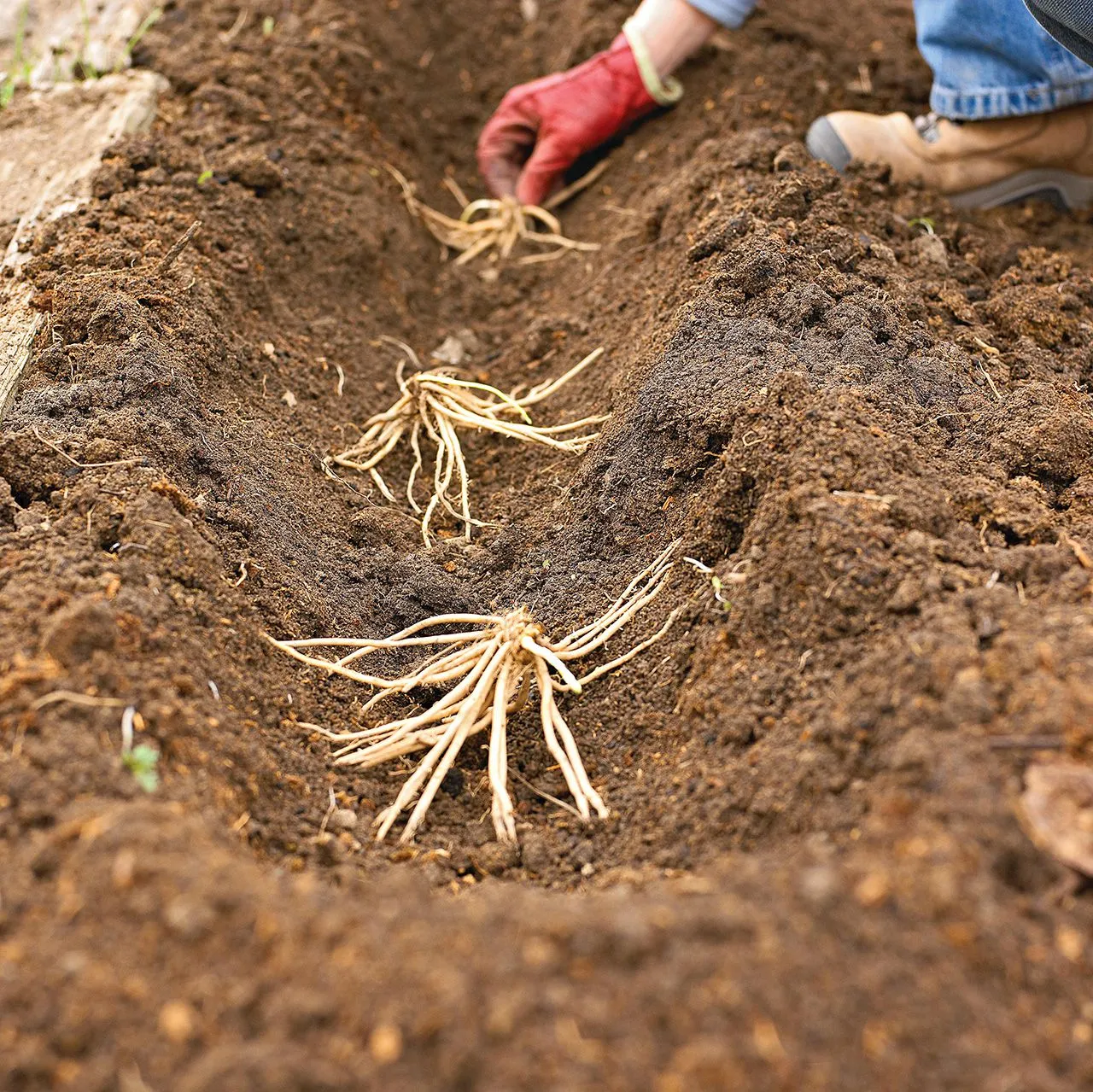
Dig a trench in compost-enriched, well-draining soil roughly 6 to 12 inches deep and 12 to 18 inches wide as soon as soil can be worked in spring. Soak the bare-root crowns in water for half an hour. Place them in the trench so the root tips are 12 to 18 inches apart. Plant ten plants per person and up to 20 for asparagus enthusiasts if space is not an issue.
Cover and Water the Asparagus Crowns
Backfill the trench and firm the soil around the crowns with your hands. Water well, making sure the soil over the asparagus crowns stays level with the surrounding soil even after the soil starts compacting over time. Continue watering throughout the first growing season, especially through dry spells, to encourage vigorous root growth.
Keep Pests and Weeds Away
Asparagus beetles feed on spears and foliage. If you see beetles or their dark eggs, pick them off and drop them in soapy water.
It is also important to control weeds in asparagus beds, especially during the spring and harvest season, because they can reduce your harvest. Once the shoots start to appear, you can keep weeds at bay with a 4- to 6-inch layer of mulch applied. Carefully hand-pull any weeds in your asparagus bed. Do not use a hoe or cultivator, as it can damage the tender roots of the plants.
Harvest the Asparagus
Allow asparagus to grow without harvesting the year it is planted, and only harvest lightly the next two years. In the second year, you can harvest spears that are ½ inch in diameter, but only for two weeks.
If you have an established asparagus bed, harvest the spears when they are 7 to 9 inches tall. Choose spears with tightly closed tips. You can either harvest by hand or with a knife. Use a sharp garden knife to slice through the stems or break spears slightly above soil level. Don't cut the asparagus below the soil because this may injure the buds, which will send up new spears. The small stub above the soil will eventually dry up and disintegrate.
Harvest for about six weeks. Once the spears start to leaf out, they'll become too tough to eat. Stop harvesting your asparagus once the diameter of new shoots is smaller than a pencil.
Maintain Asparagus Foliage
After the end of the harvest season, allow the shoots to develop into ferny growth to build up the roots for the following year's crop. The foliage will grow 4 to 6 feet tall. Keep the plants watered, weeded, and mulched all summer. Starting in year 3, fertilize the plants right after the last harvest.
In the late fall, once the foliage has turned brown, usually after a few frosts, cut it back to 2-inch stubs. Gentlyrake away any mulch and add a 2-inch layer of compost and rake the mulch back on top. This will insulate the plants against the cold and improve the soil.
If you don't have room for a large, dedicated vegetable garden, you can grow many of your favorite edibles among the ornamental perennials in a typical border. Since asparagus takes a couple of years to really get going, fill in the patch with pretty flowering annuals such as nasturtiums or petunias. In addition to asparagus, cool-season vegetables, including kale, peas, cabbage, beets, and Brussels sprouts, could be sprinkied in sunny areas of your landscape early in the spring, as soon as the soil is ready to be worked. Warm-season veggies, including tomatoes, corn, peppers, okra, cucumber, and eggplant, shouldn't be planted until the weather is reliably over 50 degrees F. but would be eye-catching additions where you need tall plants or vines to make a show. Remember to stick to organic methods of pest and weed control in any areas where you grow edible plants. Follow this guide to find the best time and the best temperature for planting your favorites.